Embedded user-centred capability
Working closely with Manchester’s internal teams, we are building up design capabilities and fostering a sustainable, user-first culture across the institution.
This is the story of how we’re helping the University of Manchester achieve its digital-first ambitions by working with them as their strategic design partner.
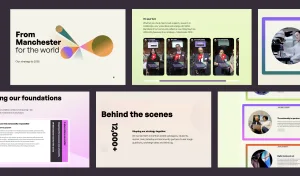
The University of Manchester has an illustrious world-leading history, but they know they can’t rest on their laurels if they want to be one of the great 21st century universities. They’ve set out a strategy to take them to 2035 and beyond, a key part of which is to be a digital university, inside and out.
The strategy is ambitious. The website needs to change to reflect this ambition. To help them to make this change happen step by step, Manchester has teamed up with Clearleft as their strategic design partner.
They don’t want to simply redesign their website; they want to redesign how they approach digital design. We’re here to help them build the foundations that will make their vision a reality.
Clearleft’s positive, adaptable approach and expertise helped us reach a really strong outcome in a short space of time. A genuinely collaborative and supportive team to work with, they brought a great energy to the whole process.
The University of Manchester’s strategy is big and ambitious. That’s daunting. They needed to take some first steps to get them on the road to their north star. By starting with some testable tactical changes, they could try new ways of working without going all in.

We travelled up to Manchester to meet with product owners there. Together we shaped five areas of work. They’re all quite different but they all support the overall strategy:
We wanted to provide continuity across all five areas. The goal for Manchester and Clearleft was to develop a consistent playbook for measuring digital success.
The product owners were keen to work in sprints, but they quickly realised that this wouldn’t work across all five projects because of pre-existing deadlines. Instead, we took a hybrid approach that aimed to keep the spirit of the Agile manifesto alive and well. Instead of getting bogged down in a set process, it was more important to focus on the outcome.
The key thing was to be nimble. In every project, the team needed to be able to experiment with new ways of working that would allow them to get results faster. If the results weren’t right, that was okay as long as they could then make adjustments quickly.
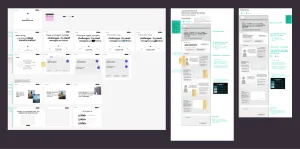
All of this can feel daunting. We wanted to help them get comfortable with feeling uncomfortable. And it’s not like we were all taking stabs in the dark here; we showed them how much existing research they had, and how many of them were subject-matter experts. They were well positioned to make informed decisions.
Once the decision-making process got faster, the process for testing those decisions needed to be faster too. It was crucial to deliver something that could be tested quickly. It didn’t need to be production-ready. It just needed to be good enough to give us answers early. These were often high-resolution prototypes.
What matters is momentum. We worked together to build up a head of steam on continuous learning.
Research. Decide. Build. Measure. Learn. Repeat.
By doing this on multiple projects at the same time, the benefits of a repeatable systematic approach have become clear. Decisions are being made quicker, delivery is happening faster, and everyone’s confidence is growing. An approach that previously sounded abstract and maybe a little scary is now feeling understandable and manageable.
We’re continuing to work with the University of Manchester, looking beyond the first five projects to the rest of the website, a design system, and the whole student experience as a service from onboarding to graduation and beyond.
Manchester is on its way to being a digital university, inside and out!