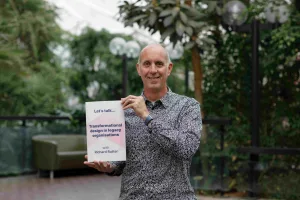
Design is not just a line item
An initial stumbling block we’d all seen is a tendency of senior leadership to view design as a cost, not a strategic asset. Design teams are brought in at the last minute, sidelining their contributions until the end. The result is missed opportunities and confusion about why design isn’t achieving its full potential.
Bridging the gaps
While there are pockets of excellent design work in many organisations, these efforts can remain disconnected from the overall strategy. We agreed that for design to really make an impact, it needs to be woven into the fabric of an organisation. Treating design as an afterthought stifles innovation and its overall effectiveness.
Powering up design teams
Empowerment was a recurring theme in our conversations. Design teams excel in environments where they’re encouraged to try new ideas and experiment. Without that freedom, design can quickly become reactive instead of proactive. It’s essential for leadership to actively champion design, ensuring that it plays a vital role in the organisation’s goals. But if that’s not in place, its incumbent on us as design leaders to make it happen.
As we chatted about ways to drive change, we realised that simple, practical steps could make a big difference. For starters, getting hands-on with user research is crucial. As we know good research can give us the insight to make better products and experiences. Inviting people from different departments to observe the process could open up lines of communication and help everyone develop a better understanding of users’ needs.
Introducing a two-way customer-centred approach could help. Sales and customer service teams often have direct interactions with users. Involving them in the design process can help input real-world user demands and also breaking down silos. We felt there’s an opportunity to demonstrate the value of design by showing how insight from other departments gets integrated successfully into design work.
Another important aspect is fostering strong collaboration with developers. Experience showed that building solid relationships helps ensure the design intent remains intact and can speed up project timelines. When design and development work closely together, good things can happen.
Finally, adopting an iterative mindset can enhance the design process. Encouraging teams to think of their work as a series of experiments, rather than striving for perfection right away, allows for growth and adaptability. This way of working can be introduced softly without permission from outside the design team.
Connecting the dots
Truly effective design in a legacy organisation often requires a culture shift. We felt that if we, as design leaders, cultivated a service design mindset, building relationships across different departments to reinforce the idea that design is essential to the business strategy. Ultimately we need to show (through metrics and other business outcomes) how design is beneficial to the organisation. This is not to justify our existence, but to ensure design is understood as a strategic advantage.